For decades, high earners have heard the same advice: contribute as much as possible to your 401(k), lower your taxable income today, and let your savings grow tax-deferred until retirement. It usually begins with that first job, where you contribute enough to earn the company match. Over time, disciplined saving and decades of compounding can grow that account into several million dollars.
So what’s the problem?
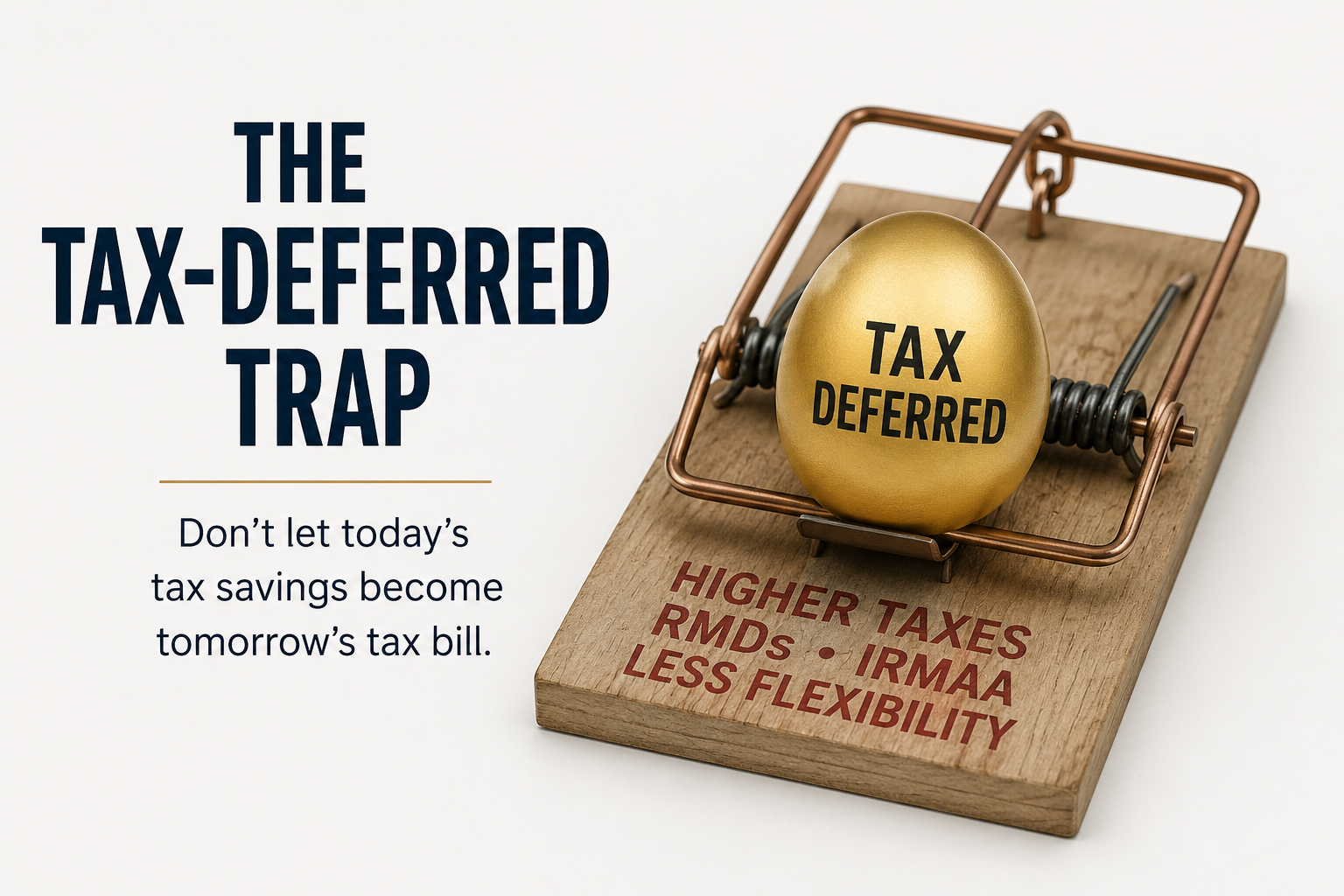
Tax deferral isn’t tax forgiveness—it’s simply postponing the bill.
Many retirees discover this too late. After spending years accumulating wealth, they enter retirement believing they’ll enjoy lower taxes, only to find that the IRS has other plans.
Imagine retiring with a $3 million traditional IRA. During your first few years of retirement, life goes according to plan. You fund your lifestyle with Social Security and withdrawals from your taxable investment account, keeping your taxable income relatively low.
Then you turn 75.
Your custodian notifies you that it’s time to take your Required Minimum Distribution (RMD). Using a simplified 4% example, that means withdrawing roughly $120,000 whether you need the money or not.
You didn’t choose to take that income—the tax code forced your hand.
That required distribution doesn’t exist in isolation. It stacks on top of your other income and may push you into a higher marginal tax bracket. It can increase the taxable portion of your Social Security benefits and even trigger higher Medicare Part B and Part D premiums through the Income-Related Monthly Adjustment Amount (IRMAA).
Suddenly, years of successful saving begin working against you.
The timing can make matters even worse. Imagine your RMD arrives during a bear market. The IRS still expects its distribution, even if your portfolio has temporarily declined. That means you may have to sell investments at depressed prices simply to satisfy the tax rules, reducing the assets available to participate in a future recovery.
Fortunately, many of these challenges can be reduced—and in some cases largely avoided—with proactive planning years before RMDs begin.
Proactive Tax Planning
One common strategy involves partial Roth conversions during lower-income years, such as the period between retirement and the start of Required Minimum Distributions. Rather than converting an entire account at once and creating a large tax bill, many retirees gradually convert enough each year to fill lower tax brackets while maintaining control over their taxable income.
Market declines may also create opportunities. Converting investments after values have temporarily fallen allows you to pay tax on a smaller amount while positioning future growth inside a Roth IRA, where qualified withdrawals are tax-free.
The goal isn’t to eliminate taxes altogether. The goal is to gain more control over when you pay them.
Tax planning doesn’t stop at Roth conversions, either. Coordinating withdrawals among taxable, tax-deferred, and tax-free accounts, managing capital gains, monitoring Medicare income thresholds, and projecting future tax brackets can all help reduce lifetime taxes—not just this year’s tax bill.
The same planning can benefit your family as well. Under today’s inherited IRA rules, many non-spouse beneficiaries must distribute inherited retirement accounts within ten years. Large traditional IRA balances can force heirs to recognize significant taxable income during their peak earning years.
The decisions you make in your 40s, 50s, and 60s can shape your tax picture for decades to come.
The greatest risk isn’t having too much money in your retirement accounts. It’s allowing decades of tax deferral to become decades of tax dependency.
With thoughtful planning, many retirees can choose when they recognize income, how much tax they pay over their lifetime, and which accounts they draw from first.
The best time to solve a tax problem is before it becomes a tax bill.